
Beyond Perks to Work-Life Harmony: Why the Future of Work Adapts to Real Life
Move beyond work-life balance. Learn how work-life harmony supports holistic wellbeing, human sustainability, and smarter work design.
EMPLOYEE ENGAGEMENT
Charles Stein
1/3/20262 min read
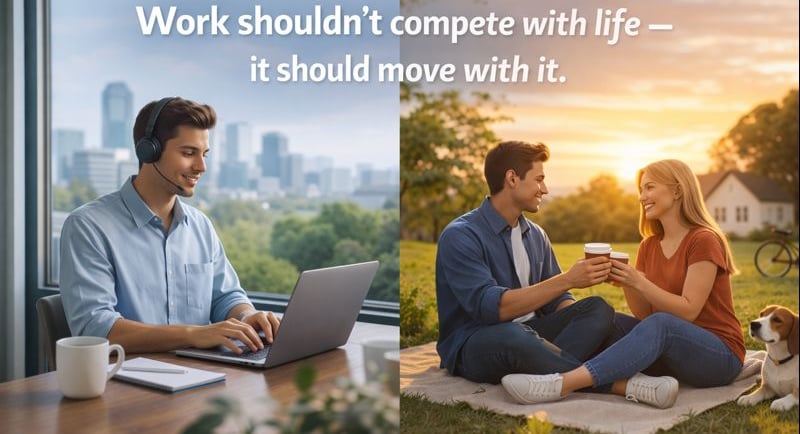
Why “Work-Life Balance” No Longer Works
When I first stepped into HR after graduating from the University of Michigan, I thought work-life balance was the goal. You work hard, then you unplug — simple.
But after three years as an HR Generalist, I’ve seen how misleading that idea really is.
Work-life balance assumes work and life are opposing forces. In reality, they’re deeply connected. When one is rigid, the other suffers. That’s why more organizations are starting to shift toward work-life harmony — a model where work adapts to the human, not the other way around.
What Is Work-Life Harmony?
Work-life harmony is about alignment, not separation.
Instead of trying to evenly divide time, harmony focuses on:
Autonomy over schedules
Flexibility built into work design
Trust measured by outcomes, not hours
Harmony recognizes that wellbeing, productivity, and engagement are interconnected — a core principle of human sustainability.
The Link Between Harmony and Holistic Wellbeing
Holistic wellbeing goes beyond mental health days or wellness apps. It includes:
Psychological safety
Physical health
Purpose and meaning
Energy sustainability
When work structures are rigid, employees spend energy managing life around work. When work is flexible, that energy gets redirected into performance, creativity, and collaboration.
Harmony doesn’t reduce accountability — it reframes it.
What Work-Life Harmony Looks Like in Real Organizations
Flexible Schedules With Intent
Defined collaboration windows + flexible individual schedules respect different productivity rhythms while maintaining alignment.
Output-Based Performance
When results matter more than hours logged, employees gain autonomy — and organizations gain clarity.
Clear Boundaries (Yes, Really)
Harmony isn’t chaos. It requires leaders to model boundaries, normalize disconnecting, and protect recovery time.
Ongoing Listening
Pulse surveys, 1:1s, and feedback loops ensure harmony evolves with employee needs — not static policies.
Why Work-Life Harmony Is a Human Sustainability Issue
Burnout isn’t just a wellbeing problem — it’s a sustainability problem.
Organizations that ignore human limits face:
Higher turnover
Lower engagement
Knowledge loss
Cultural erosion
Designing work around life supports long-term human performance, not short-term output spikes.
Why Perks Aren’t Enough Anymore
Perks assume work stays the same.
Harmony assumes work must change.
Free lunches and wellness stipends don’t fix poor work design. Harmony does — by embedding wellbeing into how work actually functions.
A Younger HR Perspective
As someone early in my HR career, what excites me most isn’t adding another perk — it’s helping organizations rethink work itself.
Work-life harmony isn’t a trend. It’s a response to how people actually live.
And the companies that get this right won’t just attract talent — they’ll sustain it.
“Work-life harmony isn’t about doing less — it’s about designing work that respects human limits.”
— Charles Stein, HR Generalist
Design Work That Sustains People — Not Just Performance
Ready to design work that sustains people — not drains them?
Explore more insights on Holistic Wellbeing & Human Sustainability and learn how smarter work design supports long-term engagement, performance, and human resilience.
👉 Explore more at WorkPlayEngage
From Balance to Harmony
Work-Life Balance
Separates work and life
Focuses on time spent
Often creates guilt when one side “wins”
Work-Life Harmony
Integrates work into real life
Focuses on energy and outcomes
Adapts work design to human needs
The Human Sustainability Lens
When work consistently ignores human limits, performance eventually declines.
Human sustainability means designing work so people can perform well — and sustainably — over time, without burnout becoming the cost of success.
Questions? Reach out anytime.
support@workplayengage.store
WorkPlayEngage is a product of Dieza Publishing. © 2026 WorkPlayEngage. All rights reserved.
Privacy & Security Note: WorkPlayEngage templates are native Google Sheets. We do not host your data, and we never have access to your employee names or internal metrics. Your engagement remains 100% private within your organization’s Google Drive.
Play:
Baby Pool
Big Guess
NFL Survivor Pool
Super Bowl Squares (Coming Soon)
Office Bingo (Coming Soon)
Help
WorkPlayEngage:
Our Story
Contact Us
Blog
Privacy Policy