
Outcome-Based Performance: Why Hybrid Work Demands a Smarter Measure of Success
Hybrid work has made desk time irrelevant. Learn how outcome-based performance models improve productivity, engagement, and trust — backed by research and real HR practice.
HR OPERATIONS
Valentina Cruz, PhD
1/1/20264 min read


Introduction: Why Time at a Desk Is No Longer the Gold Standard
For decades, organizations equated performance with presence. If employees were visible, responsive, and physically present, they were assumed to be productive. That assumption shaped performance reviews, promotion decisions, and management culture.
Hybrid work disrupted that model.
When employees began delivering results outside traditional office settings, it became clear that time spent working and value created are not the same thing. What organizations truly depend on—quality output, collaboration, innovation, and follow-through—cannot be measured by hours alone.
Today, forward-thinking HR teams are shifting toward outcome-based performance models that prioritize results over visibility. This shift is not ideological. It is grounded in research, business necessity, and how modern work actually happens.
💡 Myth vs. Reality
Myth: Presence ensures productivity
Reality: Clarity, trust, and outcomes drive sustainable performance
🧭 Industry Signal
Outcome-based performance is no longer experimental. It is rapidly becoming the standard approach in hybrid organizations.
📌 Evidence Check
Studies examining hybrid work outcomes find no consistent link between reduced supervision and lower performance. Instead, clarity of expectations and role design are far stronger predictors of success (Eurofound, 2024).
🔍 Key Takeaway
Hybrid work did not reduce accountability—it exposed outdated ways of measuring it.
Why the Old Rules Don’t Fit Hybrid Work
Traditional performance systems were designed for centralized, in-person workplaces. They rely heavily on observable behaviors: time logged, responsiveness, and physical presence. In hybrid environments, those signals are either unreliable or irrelevant.
Research consistently shows that hybrid and remote work do not inherently reduce productivity. When goals are clear and systems are well designed, performance often remains stable—or improves. A growing body of studies indicates that employees working in hybrid models report higher satisfaction and equal or better performance compared to fully in-office peers, particularly when autonomy and clarity are present (Eurofound, 2024).
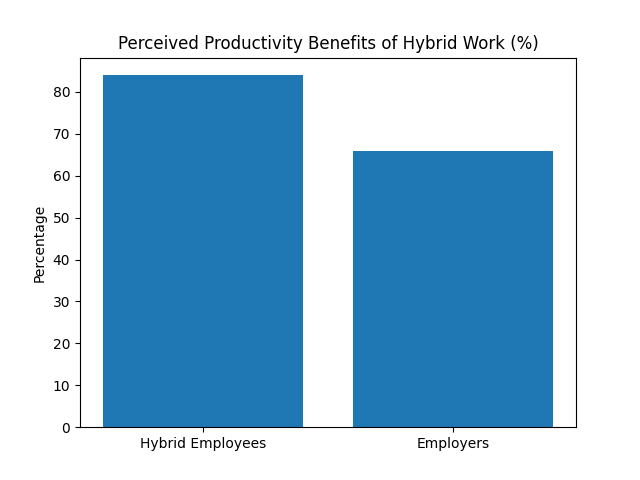
Importantly, employers are noticing this shift as well. Surveys of organizations implementing hybrid work arrangements show that many leaders now acknowledge productivity gains tied to flexibility, reduced burnout, and improved focus.
What Outcome-Based Performance Actually Means
Outcome-based performance reframes evaluation around what work achieves, not how long it takes or where it happens. It emphasizes deliverables, quality, and alignment with organizational goals.
In practice, this approach focuses on:
Clearly defined role outcomes and success criteria
Measurable deliverables tied to business objectives
Ongoing feedback instead of annual surveillance
Manager coaching rather than time monitoring
From a research perspective, outcome-based models align closely with established motivation theory. Autonomy, competence, and purpose—key drivers of engagement—are strengthened when employees are evaluated on meaningful results rather than activity levels.
This is particularly relevant in knowledge-based roles, where productivity is nonlinear and creative output cannot be reliably measured by hours alone.
What Leading Organizations Are Doing
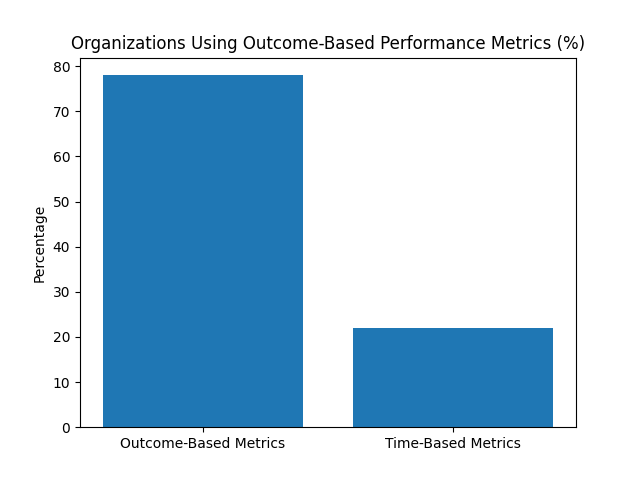
Across industries, HR departments are redesigning performance frameworks to reflect these realities. Surveys of organizations operating in remote and hybrid contexts show a clear trend: performance evaluation is moving away from time-based metrics and toward results-focused assessment.
An exploratory study of performance management practices in hybrid environments found that many organizations are adopting goal-oriented evaluation systems, emphasizing outcomes, collaboration, and value creation rather than hours worked (ResearchGate, 2024).
This shift is especially pronounced in sectors where work is project-based, cross-functional, or knowledge-driven—areas where visibility has never been a reliable indicator of contribution.
The Productivity–Engagement Connection
One of the most consistent findings in hybrid work research is the strong link between engagement and outcomes.
Employees who are trusted to manage their time and focus on deliverables tend to report:
Higher job satisfaction
Lower burnout
Stronger commitment to their organization
Greater discretionary effort
A growing number of studies indicate that hybrid work arrangements can improve well-being without harming productivity—and in many cases, improve both—when supported by thoughtful management practices (Journal of Business and Industrial Marketing, 2024).
When performance conversations center on impact rather than monitoring, employees are more likely to collaborate effectively, innovate, and remain engaged over time.
How HR Can Implement Outcome-Based Performance
Transitioning to an outcome-based model does not require dismantling existing systems. The most successful organizations take a deliberate, structured approach.
1. Define Outcomes at the Role Level
Each role should have a small number of clearly articulated outcomes tied to organizational priorities.
2. Train Managers to Coach, Not Monitor
Managers must shift from supervising time to setting expectations, removing obstacles, and providing feedback.
3. Use Tools That Track Progress, Not Presence
Modern performance and project tools allow visibility into work without intrusive monitoring.
4. Maintain Regular, Human-Centered Check-Ins
Outcome-based systems thrive on communication, alignment, and trust—not silence.
Culture Still Matters—Perhaps More Than Ever
Outcome-based performance is not a hands-off approach. In fact, it requires stronger intentional culture-building.
Organizations that succeed in hybrid environments pair outcome-based evaluation with:
Transparent goal setting
Fair and consistent performance conversations
Recognition tied to meaningful impact
Shared accountability across teams
Hybrid work makes culture visible in new ways—through communication norms, responsiveness, and follow-through. Performance systems must reinforce, not undermine, those cultural signals.
Conclusion: Measure What Truly Matters
Hybrid work did not change what organizations need from employees. It changed how clearly we can see what actually matters.
When HR leaders shift performance measurement from time spent to value delivered, they unlock stronger engagement, greater trust, and more sustainable productivity.
The future of performance is not about where work happens.
It is about what that work makes possible.
📘 Download the Outcome-Based Performance Toolkit
Practical worksheets, manager coaching tools, and review frameworks designed to help HR teams implement outcome-based performance in hybrid environments.
✅ HR Best Practice
Accountability increases when employees understand what success looks like and how their work contributes to broader goals.
Referenced Research (for Transparency & Credibility)
Eurofound. (2024). Working time and hybrid work: Measuring productivity and outcomes.
Journal of Business and Industrial Marketing. (2024). The impact of hybrid work systems on employee performance and well-being.
ResearchGate. (2024). Performance management practices in remote and hybrid work environments: An exploratory study.
Questions? Reach out anytime.
support@workplayengage.store
WorkPlayEngage is a product of Dieza Publishing. © 2026 WorkPlayEngage. All rights reserved.
Privacy & Security Note: WorkPlayEngage templates are native Google Sheets. We do not host your data, and we never have access to your employee names or internal metrics. Your engagement remains 100% private within your organization’s Google Drive.
Play:
Baby Pool
Big Guess
NFL Survivor Pool
Super Bowl Squares (Coming Soon)
Office Bingo (Coming Soon)
Help
WorkPlayEngage:
Our Story
Contact Us
Blog
Privacy Policy