
How In-Office Activity Improves Employee Morale and Creates Better Employees: A Modern HR Case Study
Discover how intentional in-office activities boost employee morale, engagement, and productivity with real HR research, proven team building results, and actionable strategies from a Fortune 500 Head of People Operations.
EMPLOYEE ENGAGEMENT
Tam Koo
1/28/20262 min read
Introduction — A Personal Perspective from Tam Koo
I’m Tam Koo, Head of People Operations at a Fortune 500 company, based in Seattle, Washington. Over my 25-year HR journey — from HR Coordinator to my current leadership role — I’ve witnessed the power of people-centric workplaces firsthand. Today, we face challenges such as disengagement, quiet quitting, and fractured team connections. But there’s one truth that remains unchanged: when employees connect, collaborate, and feel valued — morale improves and performance follows.
In this case study, I’ll share research-backed insights, real HR viewpoints, and practical examples of how in-office activities — thoughtfully designed — improve morale and produce stronger, happier teams.
The Challenge: Engagement Is Low — and It Hurts Performance
Despite significant investments in workplace programs, global engagement remains stubbornly low:
Only 32% of U.S. employees are engaged at work, meaning most employees lack commitment or enthusiasm for their roles.
Companies with low engagement can lose $450–550 billion annually in productivity and turnover costs.
This is where intentional in-office activity plays a unique role — not as “mandatory fun” — but as purposeful engagement that boosts collaboration, trust, and well-being.
Why In-Office Activities Matter
In-office activity should not be about forced “mandatory fun” — a strategy that can backfire when employees feel obligated to do something unnatural or uncomfortable.
Instead, activities should be thoughtful, inclusive, and purposeful — designed to enhance:
🧠 Connection & Belonging
Social interaction triggers positive emotion, reduces stress, and strengthens workplace bonds. Activities like casual team lunches, recognition huddles, or optional break-time games help employees feel seen and valued.
🤝 Team Collaboration and Trust
Team building research demonstrates that structured activities (retreats, cross-functional projects, shared problem solving) improve collaboration, reduce conflict, and sharpen performance.
💪 Performance & Productivity
Engagement activities correlate directly with business outcomes:
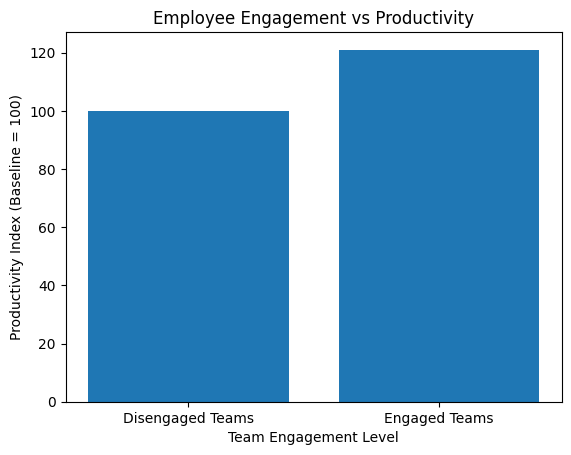
Engaged teams show 18% higher productivity in sales and 14% higher in production.
Engagement drives greater innovation, better teamwork, and enhanced client satisfaction.
Real HR Strategies that Work
Here’s how modern HR departments are turning in-office activity into measurable performance gains:
✅ Weekly “Connection Huddles”
Short, non-formal gatherings where teams share wins, recognize peers, and align around goals build psychological safety and trust.
✔ Outcome: Encourages employees to voice ideas and feel appreciated — both key engagement drivers.
Purpose-Driven Team Builders
Focus on collaboration and creativity — not trivia or forced games.
Examples:
Hackathons for cross-team problem solving
Sprint reviews with celebration time
Lunch-and-learn workshops
✔ Outcome: Strengthens communication skills, fosters innovation, and improves performance metrics.
Balancing In-Office with Flexible Work Preferences
In a world where hybrid and remote work are rising, the office still has a unique role as a hub for connection and culture.
But research indicates hybrid models can enhance well-being and productivity, with employees reporting higher job satisfaction, reduced stress, and better work-life balance when office time is balanced with flexible remote days.
This informs a key HR insight: Use in-office activity strategically — as the “glue” for relationships and culture — not simply to mandate attendance.
Implementation Tips for HR Leaders
Here are practical steps HR teams can take:
📌 Start with Data
Survey employees to understand what activities they value most — this avoids “mandatory fun” that feels imposed.
📌 Link Activities to Purpose
Every activity should connect back to company values (e.g., collaboration, innovation).
📌 Measure Impact
Track morale and performance metrics before and after events to learn what works.
The Business Case for Engagement
Engaged teams are 23% more profitable than disengaged teams.
Highly engaged employees have up to 41% less absenteeism and lower turnover.
Close friendships at work can increase satisfaction by 50% — and employees with best friends at work are 7× more likely to be fully engaged.
What Research Says About Play & Engagement
Playful activities at work aren’t just fun — they boost well-being, cooperation, and performance.
Studies show that opportunities for play:
Refresh the mind
Increase positive emotions
Encourage creativity
Boost overall job satisfaction


Questions? Reach out anytime.
support@workplayengage.store
WorkPlayEngage is a product of Dieza Publishing. © 2026 WorkPlayEngage. All rights reserved.
Privacy & Security Note: WorkPlayEngage templates are native Google Sheets. We do not host your data, and we never have access to your employee names or internal metrics. Your engagement remains 100% private within your organization’s Google Drive.
Play:
Baby Pool
Big Guess
NFL Survivor Pool
Super Bowl Squares (Coming Soon)
Office Bingo (Coming Soon)
Help
WorkPlayEngage:
Our Story
Contact Us
Blog
Privacy Policy